The SkillsUSA Framework in Action
A Blueprint for Career Readiness
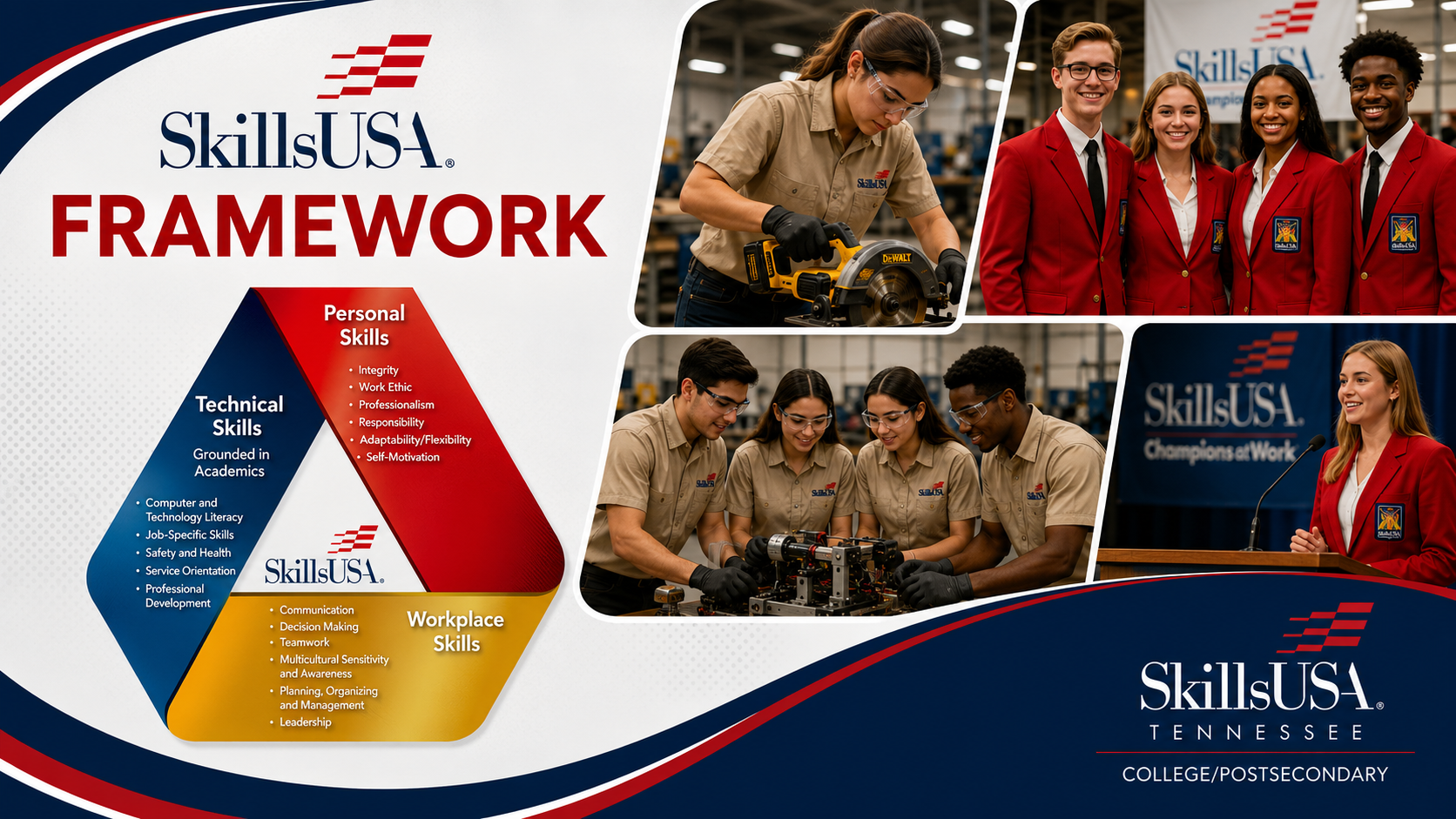
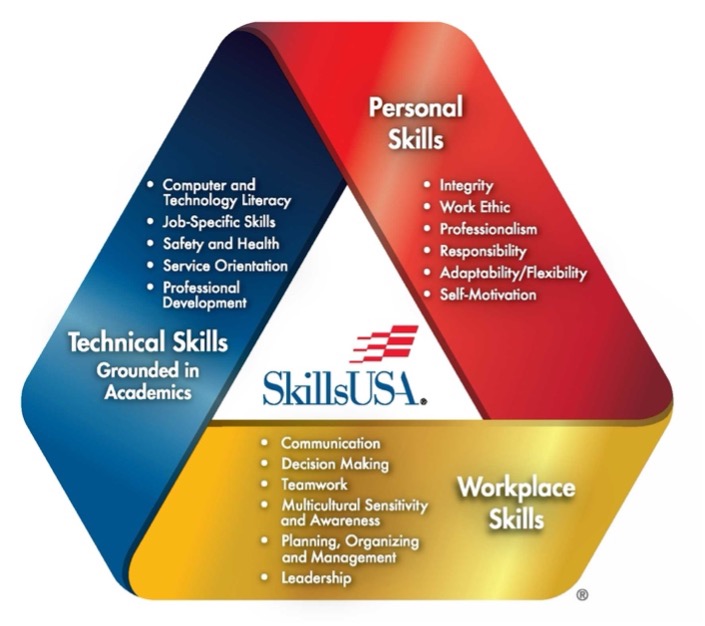
The SkillsUSA Framework defines the personal, workplace, and technical skills students need to succeed in education, employment, leadership, and life. SkillsUSA Tennessee College/Postsecondary turns that framework into intentional experiences, partnerships, and leadership pathways.
The National Foundation
Every Experience Develops Career-Ready Skills
The SkillsUSA Framework is the foundation for everything we do. Every competition, leadership activity, chapter experience, service project, and industry engagement opportunity is intentionally designed to help students develop the skills required for career success.
The national Framework identifies what students should develop. Tennessee College/Postsecondary adds an intentional operating model that shows how those skills are developed through leadership, service, partnership, and progressively greater responsibility.
From Mission to Member Success
How the SkillsUSA Framework Creates Career Readiness
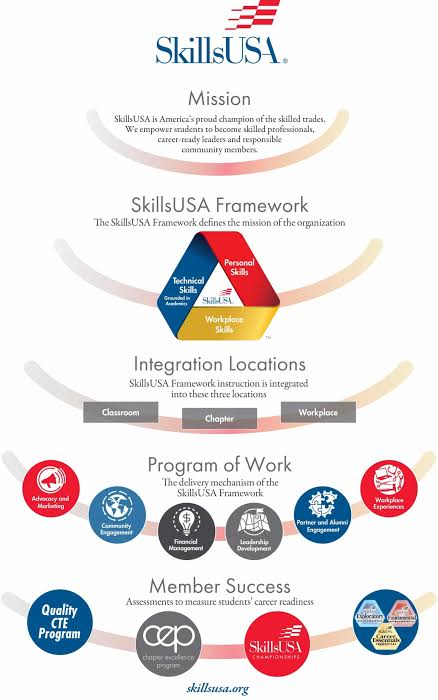
The SkillsUSA Framework is more than a list of competencies. It is a complete system that moves from mission to instruction, experience, assessment, and measurable member success.
Mission
Everything begins with preparing students to become skilled professionals, career-ready leaders, and responsible community members.
SkillsUSA Framework
Students build personal skills, workplace skills, and technical skills grounded in academics.
Integration Locations
Students practice these skills in the classroom, through the chapter, and in authentic workplace settings.
Program of Work
Six categories organize purposeful chapter experiences: advocacy and marketing, community engagement, financial management, leadership development, partner and alumni engagement, and workplace experiences.
Member Success
Growth is demonstrated through quality chapters, the Chapter Excellence Program, SkillsUSA Championships, technical skill assessments, and career-readiness measures.
The Tennessee Connection
How Tennessee Brings the Framework to Life
The national model defines the destination. Tennessee College/Postsecondary builds the leadership pathways, chapter practices, partnerships, and progressively greater responsibilities that help members reach it.
Three Components
Skills That Work Together
Career readiness requires more than technical ability. Students must also know how to lead themselves, work effectively with others, and apply technical knowledge in professional settings.
Personal Skills
Integrity, work ethic, professionalism, responsibility, adaptability and flexibility, and self-motivation.
Workplace Skills
Communication, decision-making, teamwork, multicultural sensitivity and awareness, planning, leadership, and professional relationships.
Technical Skills
Computer and technology literacy, job-specific skills, safety and health, service orientation, quality, and professional development.
Why Employers Value the Framework
Technical Skill Alone Is Not Enough
Employers need professionals who can communicate, collaborate, adapt, solve problems, take responsibility, and contribute from the first day on the job.
The SkillsUSA Framework helps students develop these abilities alongside technical training, creating graduates who are prepared to perform, lead, and continue growing.
Preparing Tennessee's Workforce
Connecting Classroom Learning With Employer Expectations
SkillsUSA Tennessee College/Postsecondary helps students practice the skills employers expect through chapter activities, competitions, leadership development, Pathful experiences, certifications, professional learning, service, and industry partnerships.
Students do not simply learn about career readiness. They demonstrate it through real decisions, teamwork, technical performance, service, professional interaction, and progressively greater leadership responsibility.
Tennessee C/PS Framework in Action
The Tennessee C/PS Leadership Model
The SkillsUSA Framework defines the skills students need. Tennessee College/Postsecondary intentionally designs the experiences that build them. Together, the four models below create a connected leadership ecosystem.
Model 01
Leadership Continuum
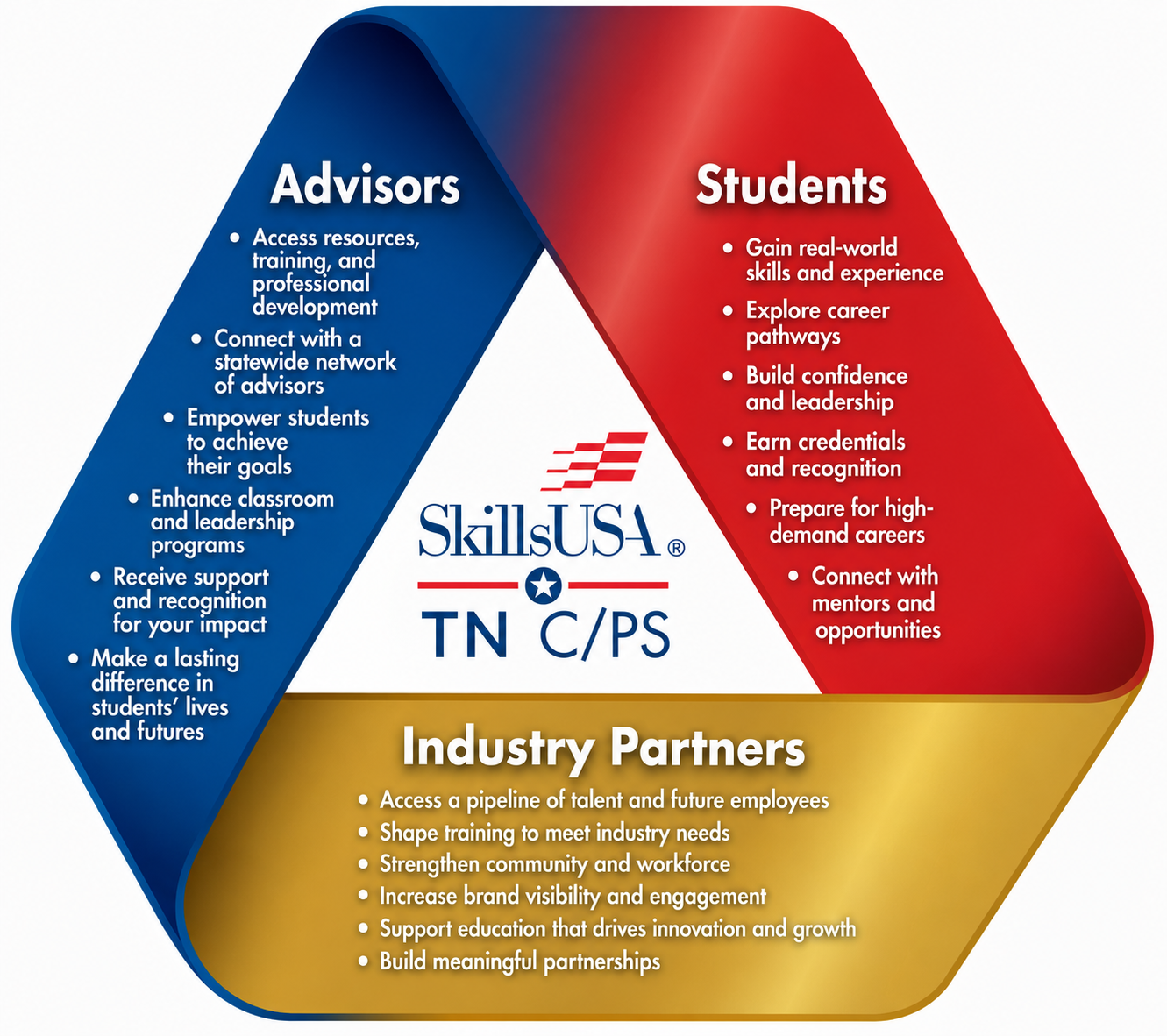
Leadership is not a single event. It is a journey.
Students, advisors, and industry partners work together to create a continuous pathway of leadership growth, career readiness, mentorship, and opportunity.
- Students build confidence, technical skill, leadership, and professional connections.
- Advisors receive resources, training, support, and a statewide professional network.
- Industry partners shape training, connect with talent, and strengthen Tennessee's workforce.
Model 02
Officer Development
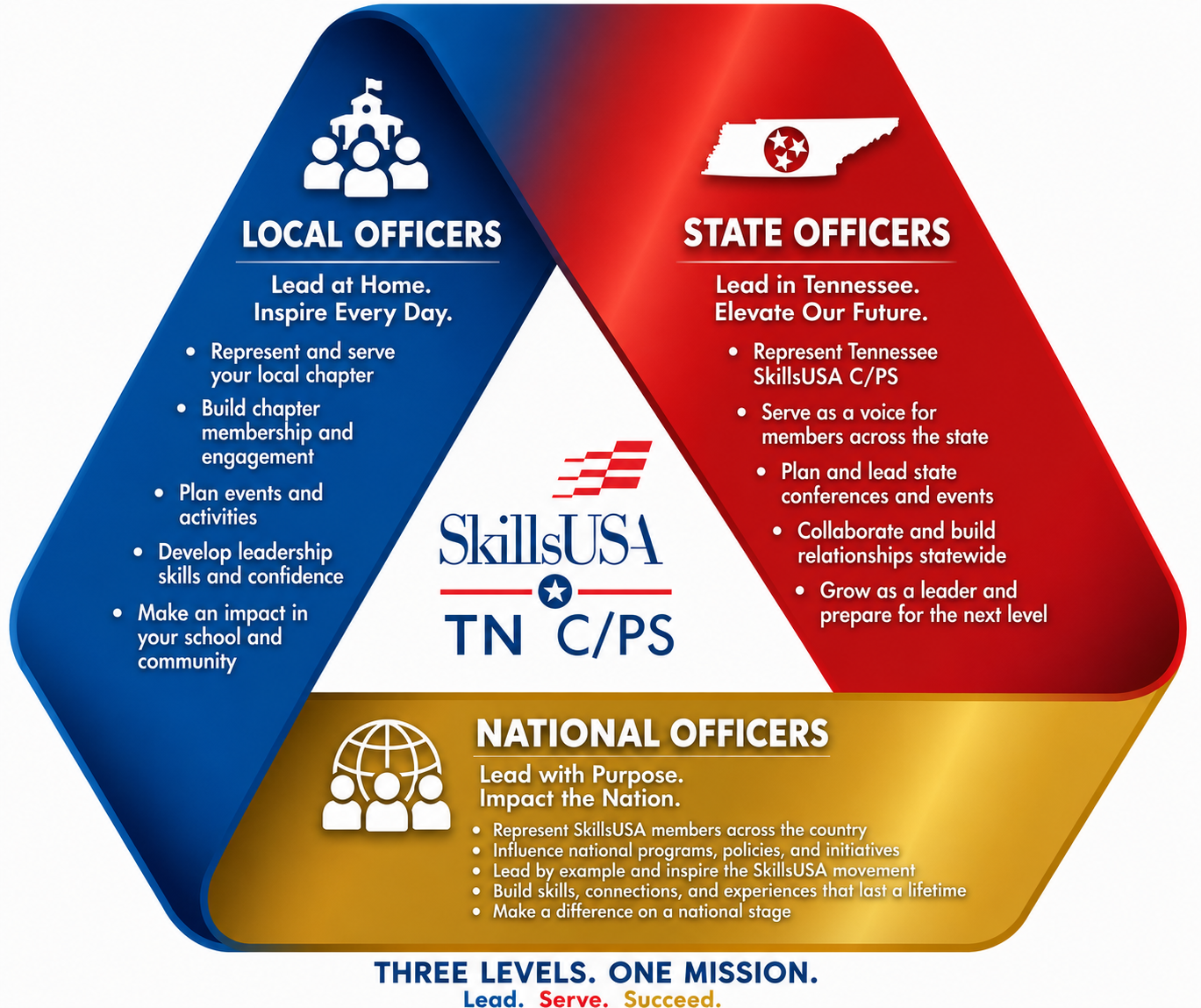
Three levels. One mission.
Officer leadership begins in the local chapter and expands through state and national service. Each level provides greater responsibility, broader influence, and deeper leadership development.
- Local officers lead at home and strengthen their chapters.
- State officers represent members across Tennessee and lead statewide initiatives.
- National officers represent the SkillsUSA movement on a national stage.
Model 03
Partnership and Advocacy
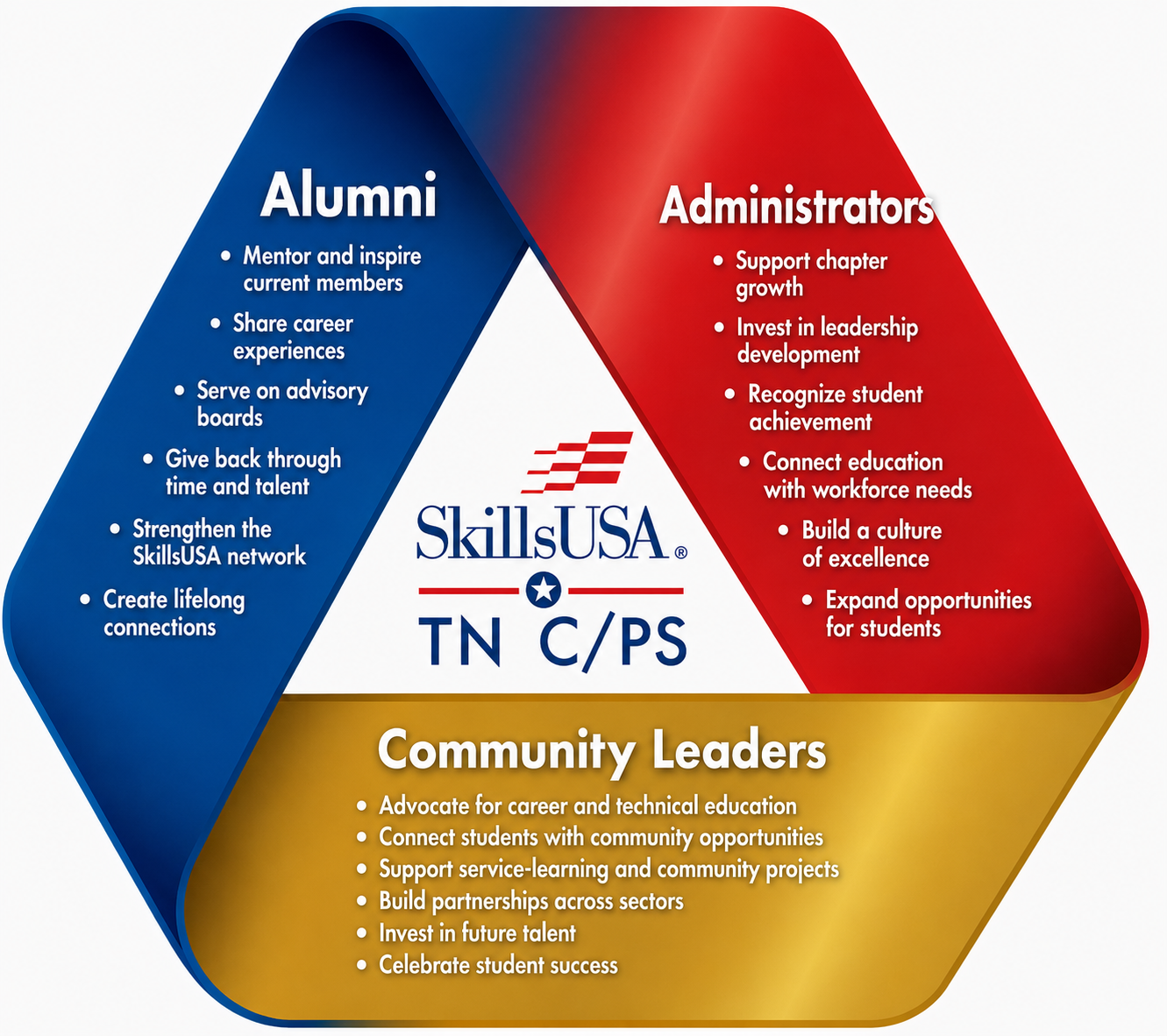
Three groups. One mission.
A strong SkillsUSA program depends on people who continue the legacy, champion student success, and connect the organization to the broader community.
- Alumni mentor students, share experience, serve, and strengthen lifelong connections.
- Administrators support chapter growth, leadership development, and expanded opportunity.
- Community leaders advocate, build partnerships, invest in talent, and celebrate success.
Model 04
Three Events Each Term
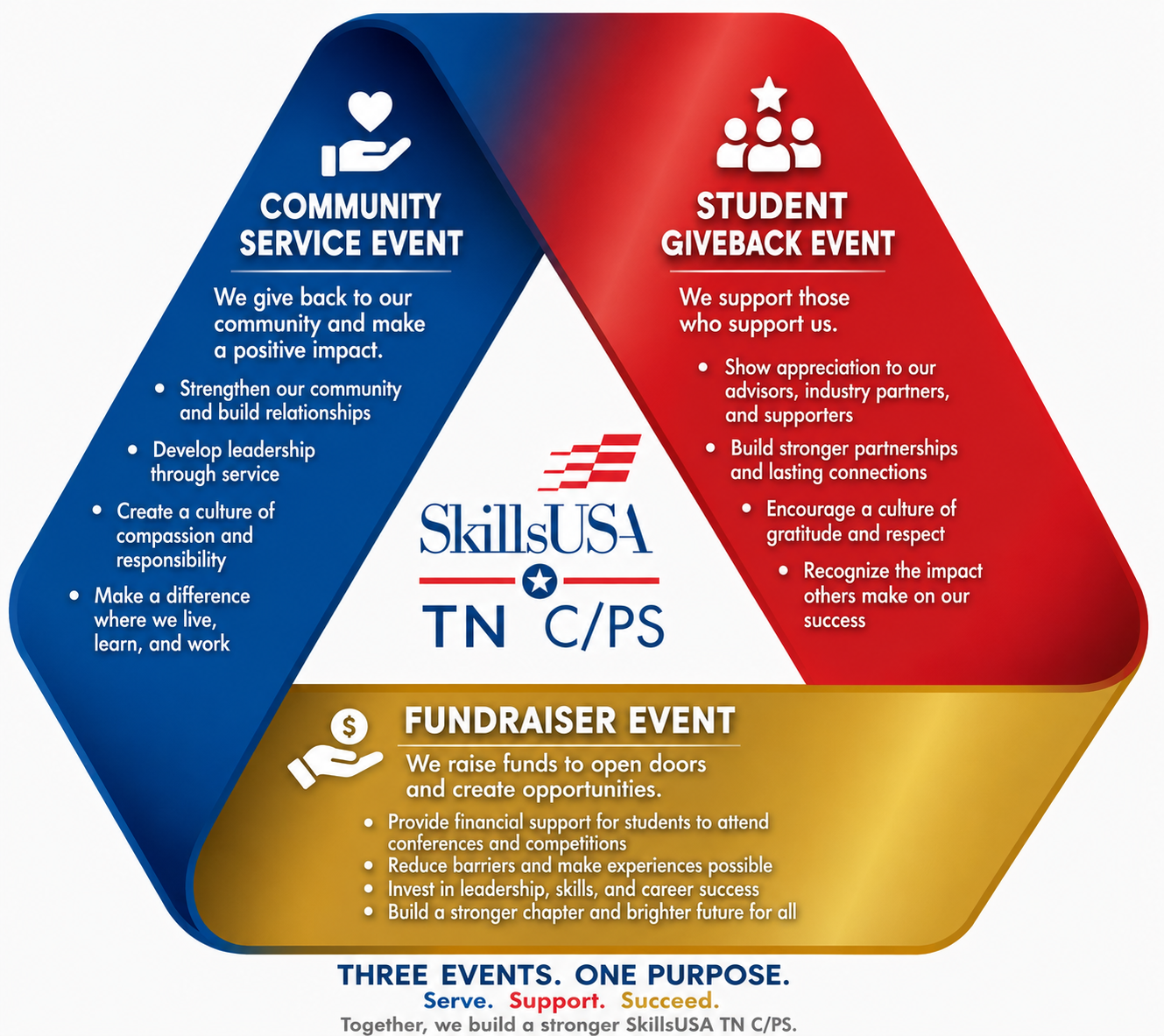
Serve. Support. Succeed.
Every term should include three intentional chapter experiences that help students serve their communities, thank those who support them, and remove financial barriers to participation.
- A community service event gives back where students live, learn, and work.
- A student giveback event recognizes advisors, partners, supporters, and others who make success possible.
- A fundraiser event helps students attend conferences, competitions, and leadership experiences.
Every Experience Has Purpose
Every Experience Builds the Framework
Tennessee C/PS experiences intentionally develop multiple Framework components at the same time. The table below shows how common chapter and state experiences reinforce career readiness.
| Tennessee Experience | Personal Skills | Workplace Skills | Technical Skills |
|---|---|---|---|
| Chapter Officer Service | ✓ | ✓ | Varies |
| Community Service | ✓ | ✓ | Varies |
| Student Giveback Event | ✓ | ✓ | Varies |
| Fundraising | ✓ | ✓ | Varies |
| SkillsUSA Championships | ✓ | ✓ | ✓ |
| Industry Tours and Career Experiences | ✓ | ✓ | ✓ |
| Advisory Board Participation | ✓ | ✓ | Varies |
| Professional Development and Certifications | ✓ | ✓ | ✓ |
| Chapter Meetings and Planning | ✓ | ✓ | Varies |
Every activity has purpose. Every experience develops career-ready professionals.
Workplace Excellence Skills
The Blueprint for the Employee Everyone Wants
These competencies are sometimes called soft skills, but there is nothing soft about them. They determine who earns trust, solves problems, leads teams, receives promotions, commands higher pay, and remains in high demand. Technical skills may help someone get hired. Workplace excellence is what makes that employee highly sought after.
Tennessee College/Postsecondary develops them intentionally through classroom learning, chapter leadership, service, competition, workplace experiences, professional development, and direct engagement with industry.
Select an element to expand it. Each section includes a plain-language definition and a CTE workplace example.
01Integrity
Definition: Choosing honesty, ethical conduct, and accountability, even when no one is watching.
CTE workplace example: An automotive technician finds that a customer was charged for a part that was not installed, reports the mistake, and corrects the invoice before the vehicle is released.
02Work Ethic
Definition: Showing consistent effort, dependability, persistence, and pride in the quality of one's work.
CTE workplace example: A welding apprentice arrives prepared, meets production deadlines, cleans the work area, and reworks a weak weld instead of passing along a poor-quality product.
03Professionalism
Definition: Presenting oneself and interacting with others in a way that earns trust and reflects workplace standards.
CTE workplace example: A medical assisting student arrives early for clinicals, follows the dress code, protects patient privacy, and communicates respectfully with patients and staff.
04Responsibility
Definition: Owning decisions, meeting commitments, and accepting the consequences of one's actions.
CTE workplace example: A culinary employee realizes a prep task was missed, immediately informs the chef, completes the work safely, and adjusts the checklist so it does not happen again.
05Adaptability and Flexibility
Definition: Responding productively to changing conditions, priorities, tools, people, and expectations.
CTE workplace example: A manufacturing technician adjusts to a revised production schedule, learns a new machine interface, and helps the team maintain quality during the transition.
06Self-Motivation
Definition: Taking initiative and pursuing improvement without waiting to be directed at every step.
CTE workplace example: An information technology student notices repeated help-desk requests, researches the cause, creates a clear user guide, and shares it with the supervisor.
07Communication
Definition: Exchanging information clearly and appropriately through speaking, listening, writing, and professional nonverbal behavior.
CTE workplace example: An HVAC technician explains repair options in plain language, confirms the customer understands the costs, and documents the service accurately.
08Decision-Making
Definition: Evaluating information, considering consequences, and selecting an effective and ethical course of action.
CTE workplace example: A nursing student notices a change in a patient's condition, reviews the available information, and promptly follows the proper reporting chain.
09Teamwork
Definition: Contributing reliably to shared goals while respecting roles, perspectives, and the success of the group.
CTE workplace example: A construction crew coordinates measurements, material handling, safety checks, and installation so the project stays on schedule without sacrificing quality.
10Multicultural Sensitivity and Awareness
Definition: Working respectfully and effectively with people whose identities, backgrounds, experiences, and perspectives differ from one's own.
CTE workplace example: A cosmetology professional asks clients about their preferences and hair-care practices rather than making assumptions, then adapts the service appropriately.
11Planning, Organizing and Management
Definition: Setting priorities, using resources wisely, tracking progress, and completing work efficiently.
CTE workplace example: A graphic communications student builds a production timeline, confirms file requirements, schedules proof approval, and plans for printing and delivery.
12Leadership
Definition: Influencing and supporting others toward a shared purpose through service, judgment, courage, and accountability.
CTE workplace example: A student crew leader notices a safety shortcut, stops the task, explains the risk, and reorganizes the workflow so the team can finish correctly.
13Computer and Technology Literacy
Definition: Using digital tools, systems, data, and technology responsibly and effectively to complete work and solve problems.
CTE workplace example: A logistics employee uses inventory software to trace a shortage, validates the data, and updates the team without exposing confidential information.
14Job-Specific Skills
Definition: Applying the specialized knowledge, techniques, tools, and standards required for a particular occupation.
CTE workplace example: An industrial maintenance technician reads a schematic, diagnoses a motor-control fault, and completes the repair according to manufacturer specifications.
15Safety and Health
Definition: Protecting oneself and others by recognizing hazards, following procedures, and supporting a culture of physical and psychological well-being.
CTE workplace example: A collision-repair student identifies improper ventilation before painting, stops the process, and corrects the setup before work resumes.
16Service Orientation
Definition: Understanding and responding to the needs of customers, patients, clients, coworkers, and communities.
CTE workplace example: A pharmacy technician listens carefully to a customer concern, follows privacy rules, and connects the customer with the pharmacist for appropriate guidance.
17Professional Development
Definition: Continuously strengthening knowledge, skills, credentials, networks, and career direction.
CTE workplace example: A cybersecurity student earns an industry certification, requests feedback after an internship, and builds a learning plan for the next level of responsibility.
Experience the Framework
Find Your Place in the Tennessee C/PS Leadership Ecosystem
Whether you are a student, advisor, administrator, alumnus, employer, or community leader, there is a role for you in building Tennessee's future workforce.